
Clan Tartans
|
The Hunter Tartans shown below are shown as they appear in the Scottish Register of Tartans
The Scottish Register of Tartans was established by an act of the Scottish Parliament in 2008, to protect, promote and preserve tartan. The Register is a database of tartan designs, maintained by the National Records of Scotland. Anyone, from anywhere in the world, can register a new tartan (individuals, schools and corporate groups as well as professional designers and weavers) providing that it meets their criteria for registration. For further research you can access their website by selecting here |
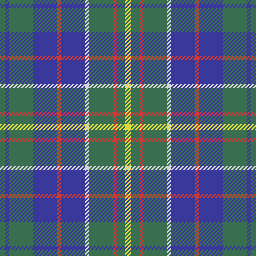
Hunter of Hunterston TartanThe information held within The Scottish Register of Tartans for the "Hunter of Hunterston" tartan is shown below.
The Clan Chief decided that we should have our own Clan Tartan and in 1981 he appointed Capt. T Stuart Davidson, the original founder of the Scottish Tartan Society, as tartan consultant to Clan Hunter. After two years of extensive research and study a new sett was completed. This has been named the "Hunter of Hunterston Sett" to separate it from the other Hunter tartans. It is more commonly known as "The Clan Hunter Tartan". The sett or design was carefully chosen to incorporate a close relationship with the clan history: a predominantly green hunting ground colour, with narrow gold (yellow) and red stripes representing colours from the Chief's coat of arms. The yellow stripe indicates the royal appointment as huntsman to the king. The Clan holds an international trade registration patent on the design of the Clan tartan. This is the tartan displayed at the top of this web page. One must be cautious with regards to the colours displayed on your terminal or PC. Colours may not be exactly as shown. Clan members wishing to purchase items may contact the clan mail order service or items may be specially made by our sole licensing agent
Geoffrey (tailor) Highland Crafts Ltd. Edinburgh The Hunter, Russel, Mitchell, Galbraith, tartan shared by the four families. 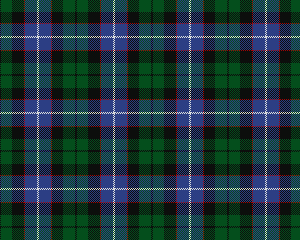
The Hunters of Bute tartan. 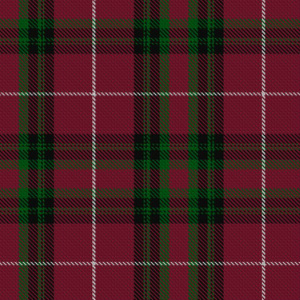
The Hunters of Peebleshire tartan. An old branch of the family. 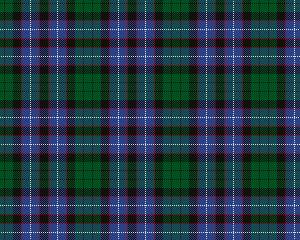
Hunter 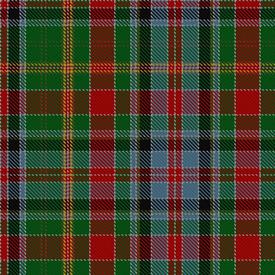
Hunter (1775) 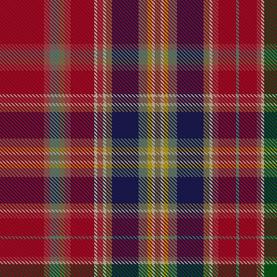
Hunter (USA) 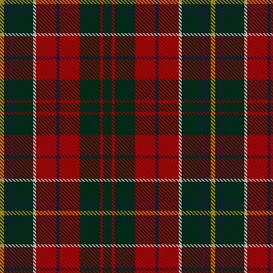
Hunter (Wilson) 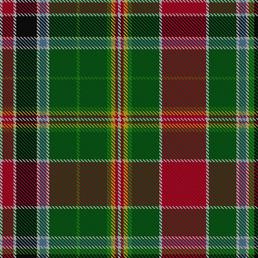
Hunter Graham 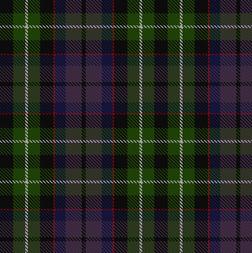
|